









Knee Pain Treatment
Clinical Solutions for Lasting Joint Health
Knee pain is a common condition that can significantly impact daily mobility and overall quality of life. Whether it is caused by sudden injury, mechanical problems, or chronic degenerative conditions such as osteoarthritis, addressing the root cause is essential for long-term recovery. Early intervention is often the key to preventing further joint degradation and maintaining an active lifestyle.
Knee Pain Treatment: Restore Your Mobility in Singapore and Thailand
- March 23, 2026
- 1489 Views
- Reading Time: 6 minutes
Stem Cell for Knee Pain: Is Thailand the Answer for Your Joint Recovery?
- March 23, 2026
- 1476 Views
- Reading Time: 5 minutes
Knee Joint Pain Management: Expert Care in Singapore
- March 23, 2026
- 1603 Views
- Reading Time: 5 minutes
Why You Should Address Knee Pain Early?
The knee is one of the most complex joints in the human body, bearing the weight of your entire frame. Ignoring persistent discomfort can lead to compensatory injuries in the hips or ankles and may result in permanent damage to the cartilage. Current medical evidence now offers regenerative treatments that aim to repair tissues rather than merely masking the symptoms. Seeking professional advice early ensures that you have access to a wider range of conservative and clinical options.
Treatment Options for Knee Pain
Depending on the severity and cause of your knee pain, several treatment pathways are available:
Conservative and Non-Surgical Management
- Physical Therapy: Exercises to strengthen supporting muscles and improve joint stability.
- Lifestyle Modification: Weight management and activity adjustments to reduce joint pressure.
- Medication: Use of anti-inflammatory drugs to manage acute pain and swelling.
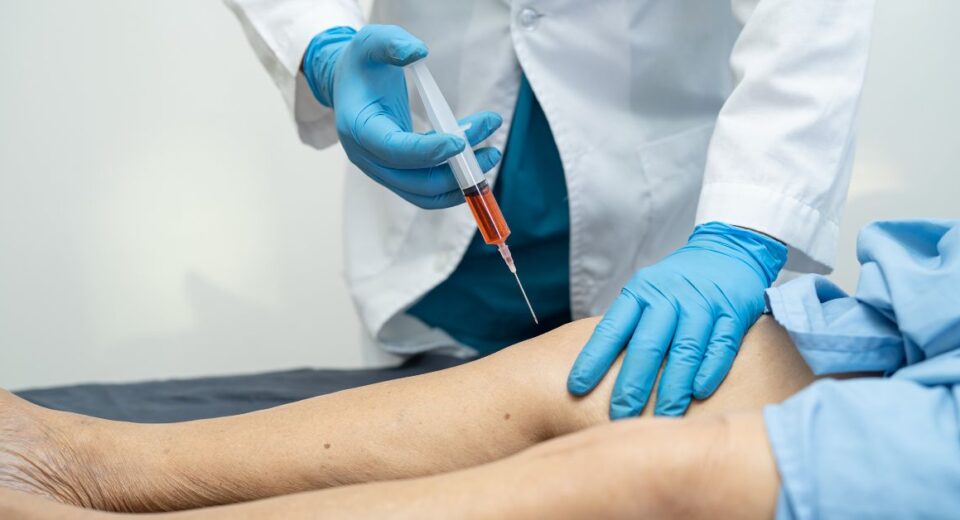
- Injection Therapies: Corticosteroids or Hyaluronic Acid to reduce inflammation or provide lubrication.
Biological and Regenerative Treatments
If traditional therapies have not provided relief, several biological treatments are available to promote healing and restore function:
- Stem Cell Therapy for Knee Pain: This approach uses the body’s own signalling cells to support the repair of damaged tissues and reduce inflammation.
- Autologous Chondrocytes for Symptomatic Articular Cartilage Defects of the Knee: This specialised procedure involves harvesting, cultivating, and re-implanting your own cartilage cells to restore the joint surface.
- Autologous Protein Solution (APS) Injection: Often referred to as a “pro-inflammatory blocker,” this uses a concentrated solution of proteins from your own blood to combat the progression of osteoarthritis.
Surgical Interventions
- Arthroscopy: Minimally invasive surgery to repair ligaments or remove loose cartilage.
- Knee Replacement: Replacing damaged joint surfaces with artificial components in cases of severe degeneration.
Hospitals & Medical Centres
Find A Doctor
Are you struggling with persistent knee pain? Speak to an Orthopaedic Surgeon, Stem Cell Specialist, or Pain Management Specialist. They can perform a clinical assessment to determine the most appropriate treatment pathway for your specific condition. Factors such as the extent of cartilage wear, your activity level, and your general health will guide the choice of therapy. Expert guidance ensures that you receive a personalised care plan tailored to your recovery goals.

[SG] Featured Doctor
Featured Story
View more Orthopaedic Surgeons and other specialists on Find A Doctor.
Book an appointment for a knee assessment and treatment or to consult an Orthopaedic, Stem Cell, or Pain Management Specialist.
Featured Financial Advisors

[SG] Featured Doctor
Featured Story
FAQs
Stem cell therapy aims to improve the internal environment of the knee joint. By introducing concentrated cellular material, the treatment helps to modulate the immune response and support the natural healing processes of the body.
This procedure is typically recommended for individuals who have specific, isolated symptomatic articular cartilage defects of the knee rather than widespread or systemic joint degeneration.
While standard injections often focus on providing temporary lubrication, an Autologous Protein Solution (APS) injection is designed to rebalance the inflammatory environment within the knee to potentially slow down the degradation of the joint.
Recovery times vary depending on the specific procedure. While biological injections may require only a few days of reduced activity, surgical interventions like Autologous Chondrocyte Implantation involve a structured rehabilitation programme to ensure the new cartilage integrates successfully.